AGROSOIL: Outreach Day - 19th of March
General
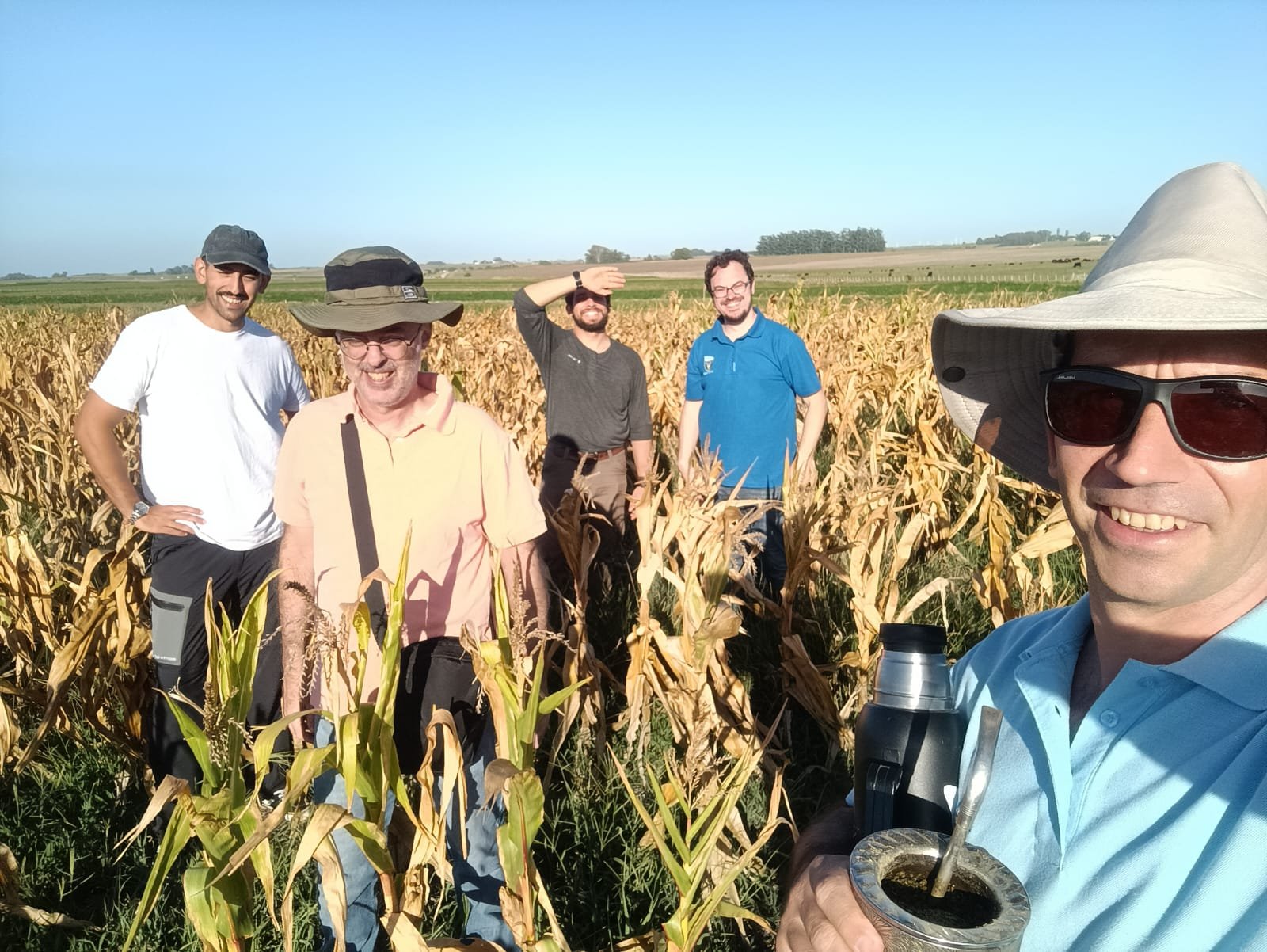
The GEH project AGROSOIL, in collaboration with Instituto Nacional de InvestigaciónAgropecuaria (INIA) Uruguay, organized a scientific outreach day to showcase research fundamentals, tools, and project activities across Uruguay, Ireland, and Germany. The event covered a wide range of topics, from agrogeophysicalmethods to crop science and machine learning. The day took place at La Estanzuela, Uruguayan the 19th of March.
Specific details about the Open Day
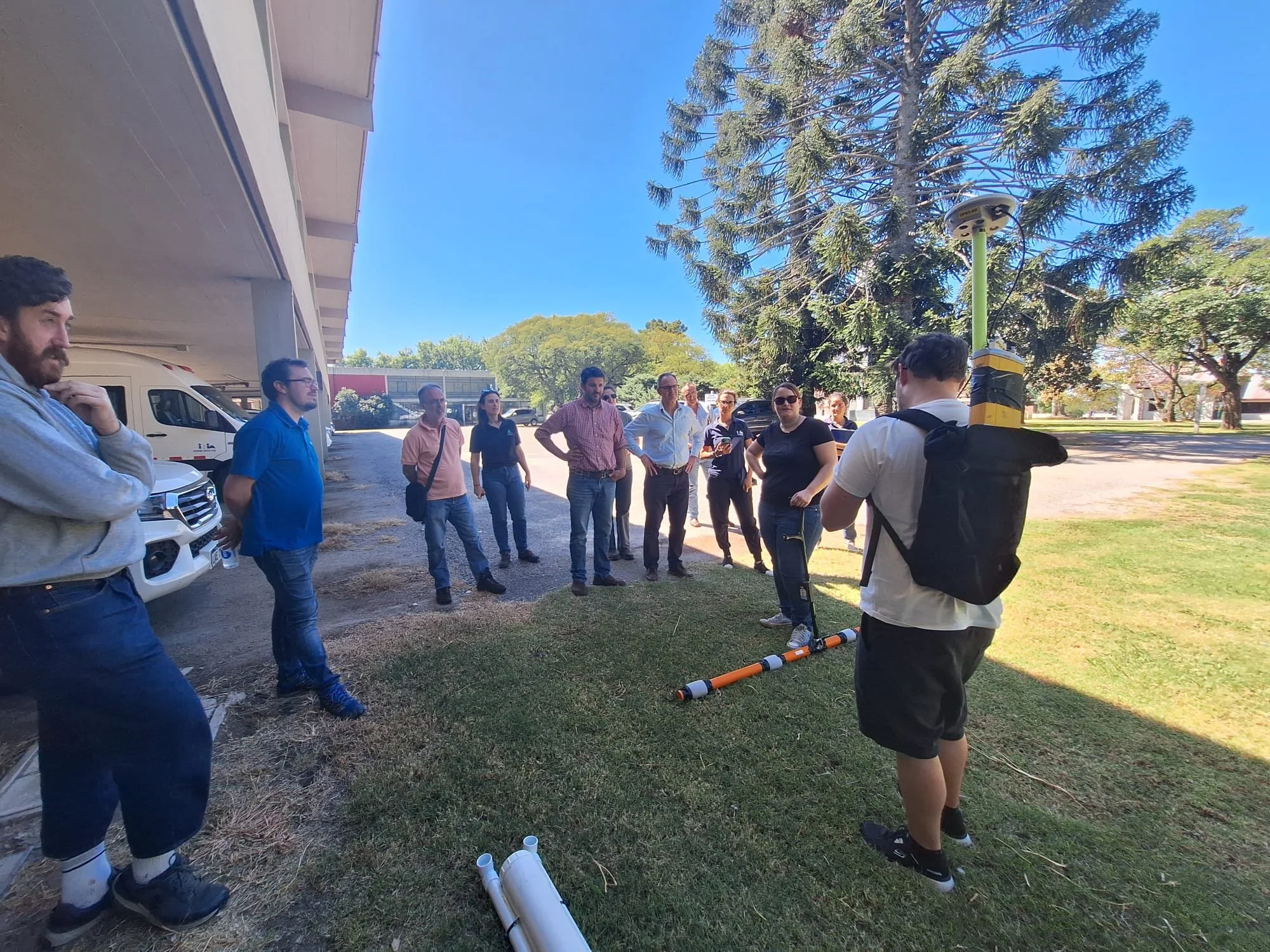
The outreach activities lasted approximately seven hours and brought together 17participants, both online and on-site, from various academic institutions from Argentinaand Uruguay - including the Universidad de Buenos Aires, Universidad Nacional de LaPlata, Universidad de la República, Instituto Nacional de Investigación Agropecuaria(INIA), Universidad Nacional de Salta, Universidad Nacional del Sur, UniversidadNacional de Tucumán.
Representatives of the Diálogo Agropecuario Uruguayo-Alemánalso showed interest in the international research collaboration within the AGROSOIL. After welcoming words from Andrés Quincke, Anja Klotzsche (Forschungszentrum Jülich) opened the event with an introduction to the geophysical fundamentals and principles applied within the project.
This was followed by presentations from Julián Ramos (UBA,UdelaR) and Lena Lärm (Forschungszentrum Jülich), who demonstrated how these principles are implemented in current research projects and platforms in Uruguay and Germany.Gary Gillespie (University College Dublin) provided insights into the agricultural landscape in Ireland, highlighting how climate conditions introduce constraints and challenges. Declan Delaney (University College Dublin) introduced the role of smartsensor networks and machine learning in modern agricultural systems.
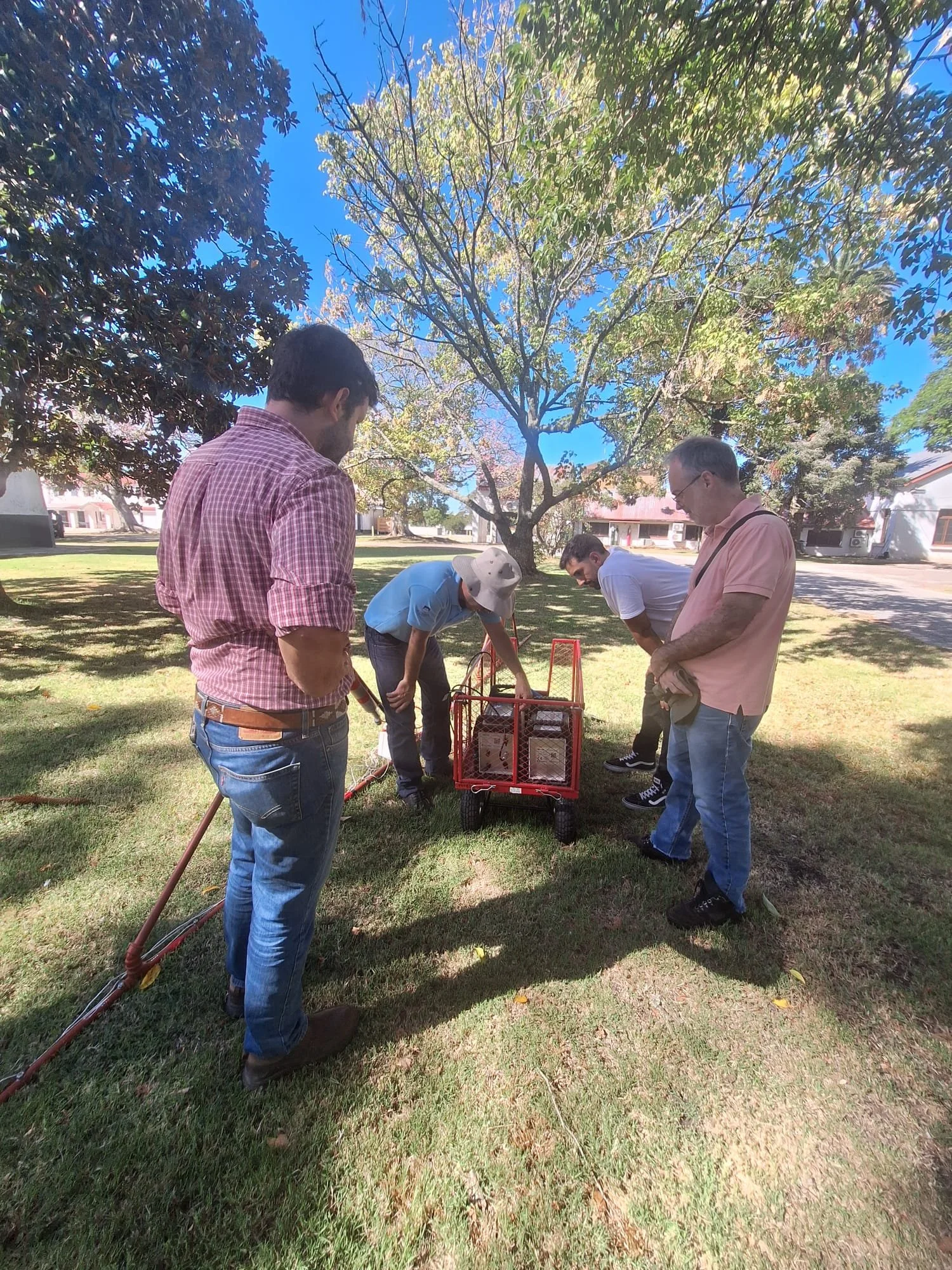
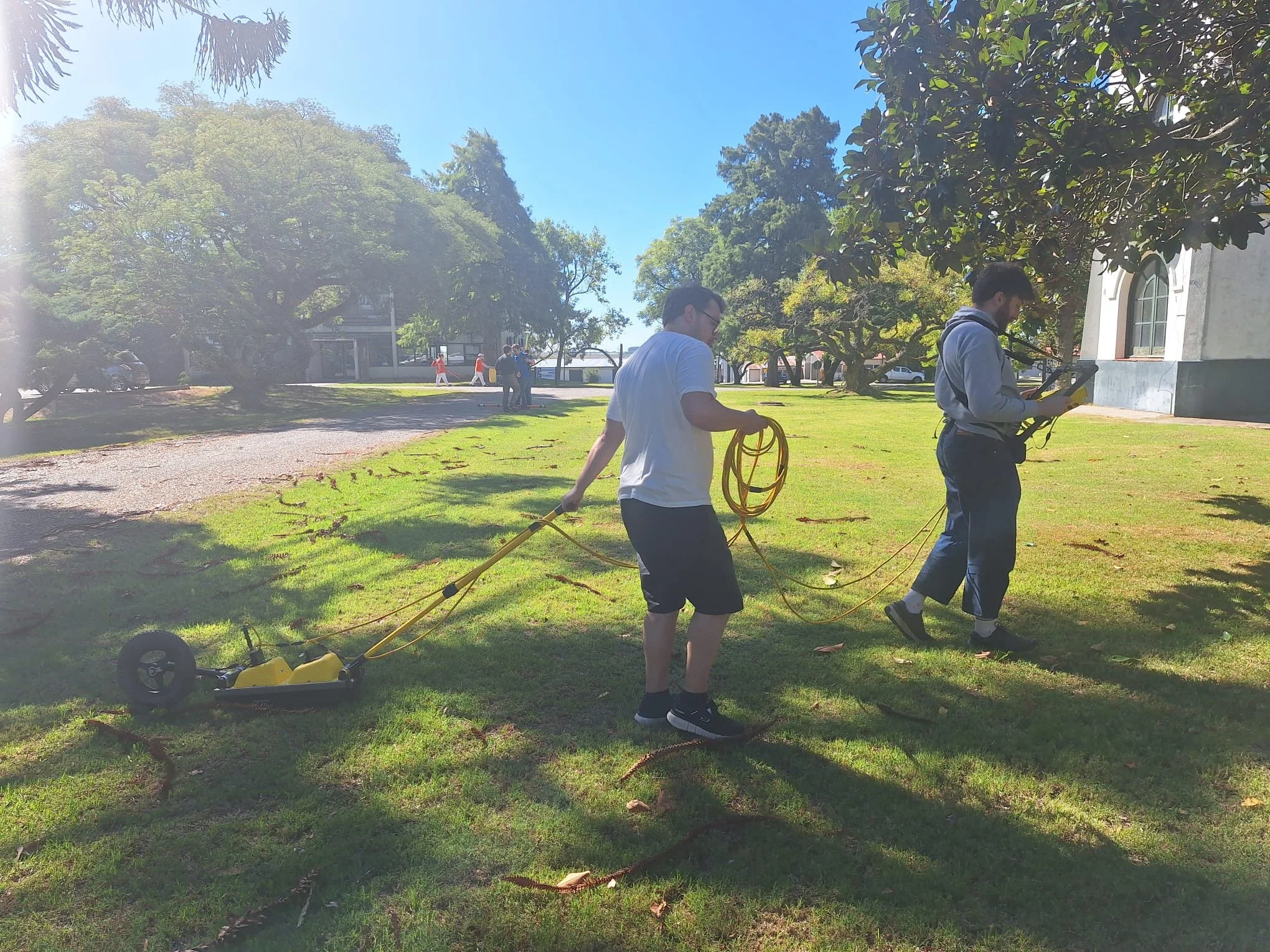
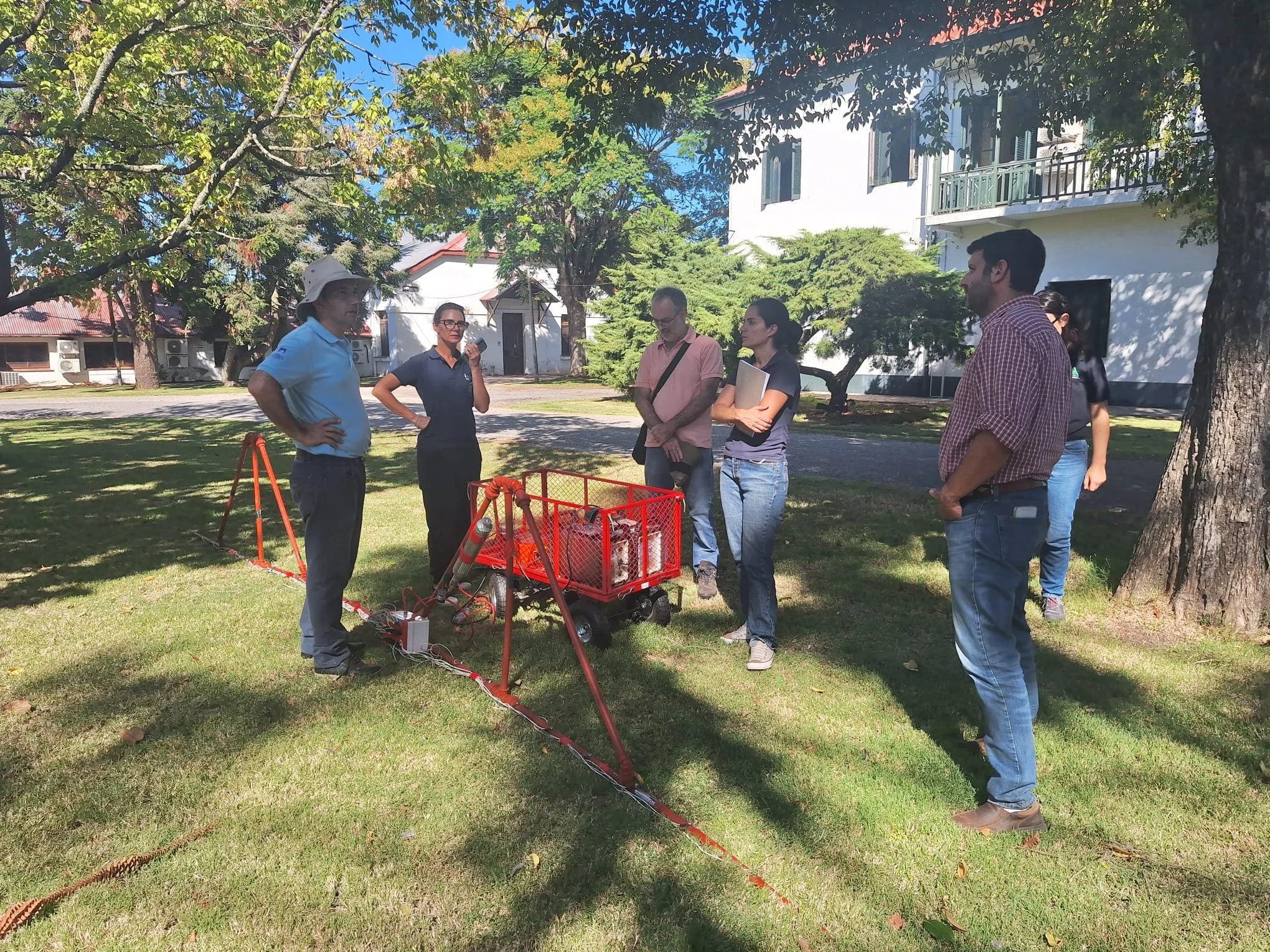
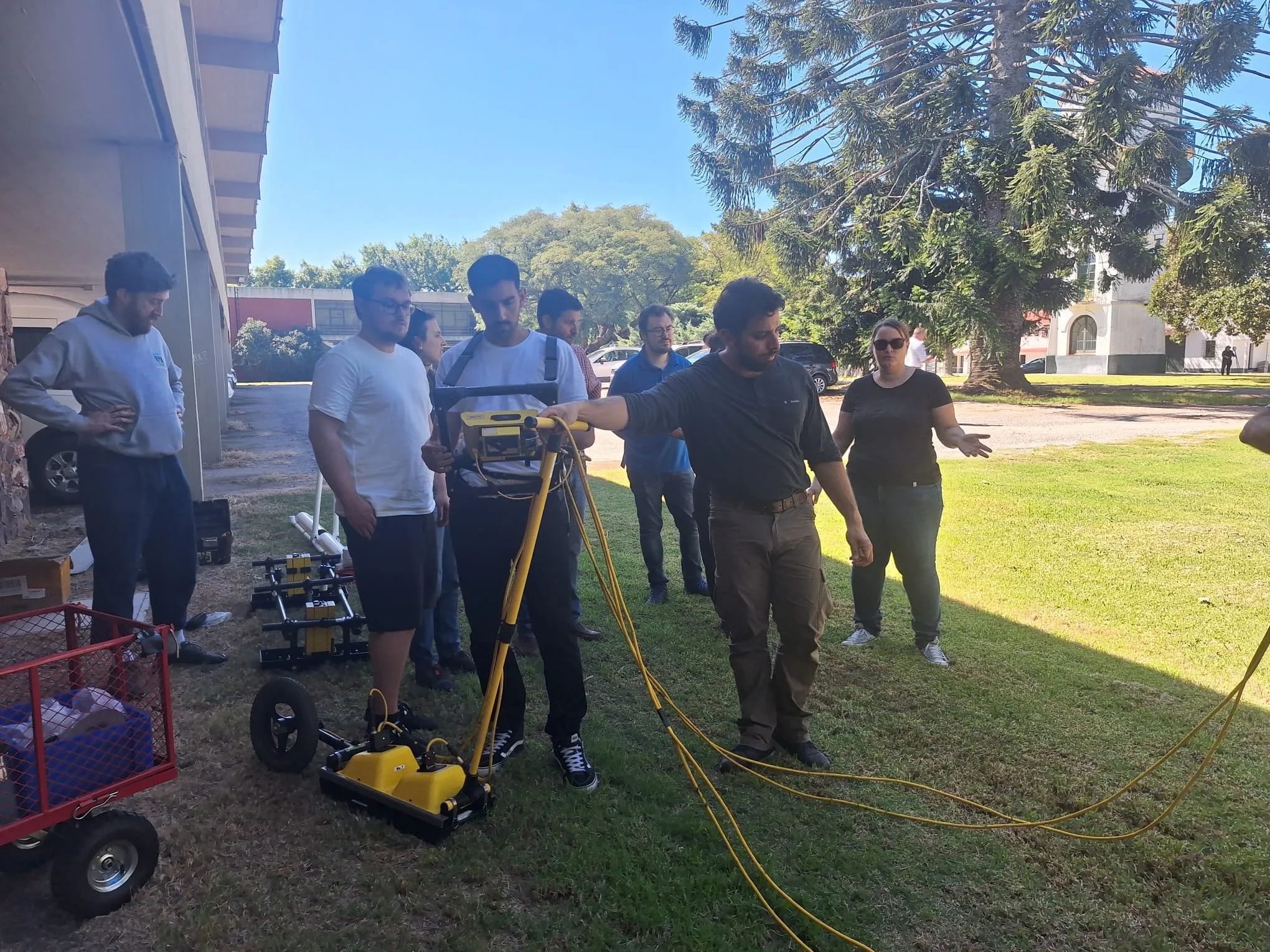
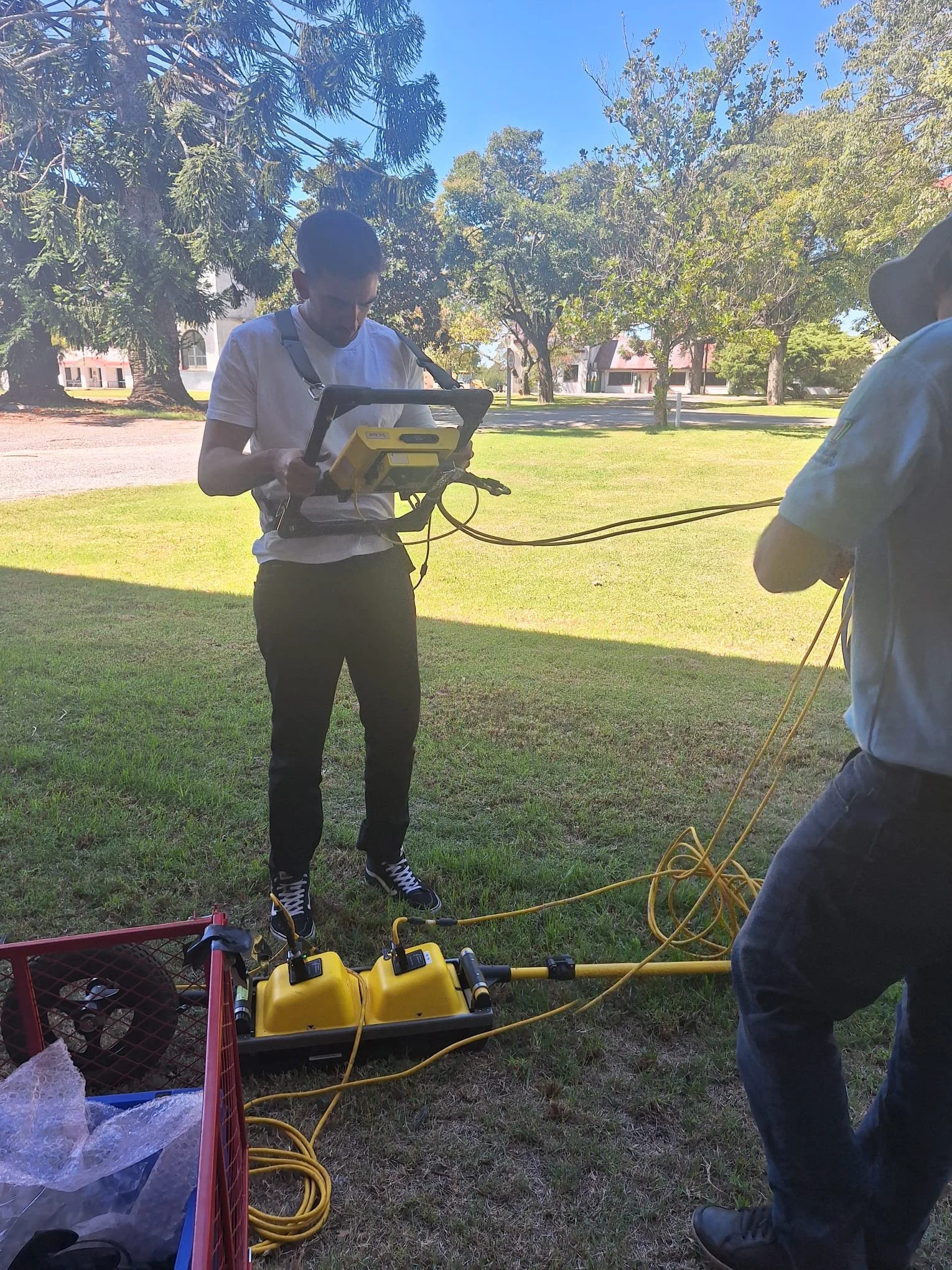
The theoretical sessions were complemented by a practical demonstration ofgeophysical measurement equipment, giving participants the opportunity to gain hands-on experience. Forschungszentrum Jülich showcased electromagnetic induction and ground-penetrating radar equipment brought from Germany, explaining both measurement procedures and key considerations when collecting agrogeophysical data. Julián Ramos also presented his mobile electrical resistivity tomography (ERT) systems.
A special thank you went to Andrés Quincke and the entire team at INIA La Estanzuela fororganizing this inspiring and well-coordinated event.
More details about the technology and the project itself:
AGROSOIL is at the forefront of applying agrogeophysics to transform how we understandand manage soils under climate extremes. The project integrates advanced geophysical techniques—such as electromagnetic induction, electrical resistivity tomography, andground-penetrating radar—with smart soil sensors to enable non-invasive, high-resolution monitoring of soil health.
By investigating how soils and crops respond to varying climate conditions, AGROSOIL generates insights that support the development of autonomous monitoring tools and practical workflows. These innovations aim to help farmers to optimize water and fertilizer use, enhance crop resilience, and reduce environmental impact.
Beyond monitoring, AGROSOIL contributes to building a smarter and more sustainable agricultural system. Its focus is on non-destructive measurement methods and efficient resource use supports climate-smart agriculture and promotes long-term food security.