Sustain Sheep
Results of a stakeholder survey to understand stakeholder awareness and willingness to adopt genetic solutions for climate-smart sheep breeding
General:
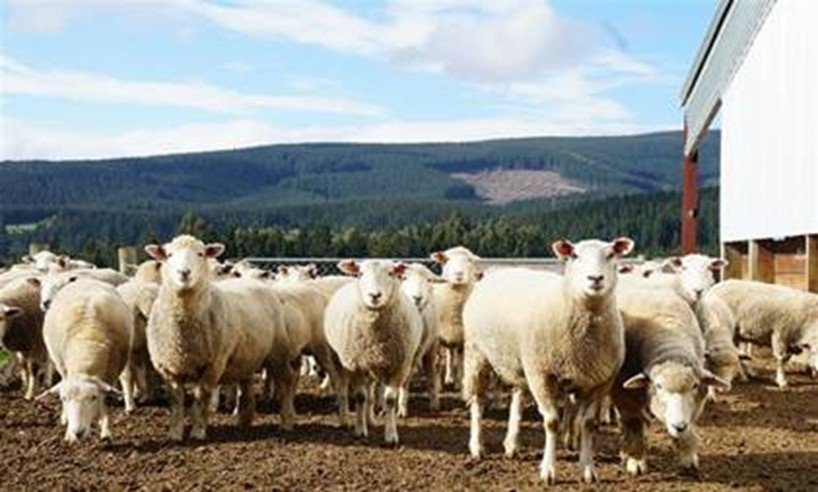
The Sustain Sheep project (Reducing global sheep methane emissions: sustainability in practice via new breeding goals) is funded by the Green ERA-Hub. The project is coordinated by Teagasc and involves partners from 6 different countries, spanning Europe, South America and Australasia. The project aims to enable incorporation of genetic merit for low environmental impact into national sheep breeding schemes, providing a mechanism for national and global comparison. This work will provide farmers and policymakers with tools to compare methane emissions from sheep production systems and will help to break down barriers to the successful implementation of science into policy. A key part of the project is concentrating on knowledge transfer and exchange, to maximise stakeholder engagement and determine the best mechanisms for dissemination and implementation of project results. A survey was circulated to understand stakeholder awareness and willingness to adopt genetic solutions for climate-smart sheep breeding. The main findings from this survey will be presented at the World Congress on Genetics Applied to Livestock Production (WCGALP) 2026, to be held in the United States.
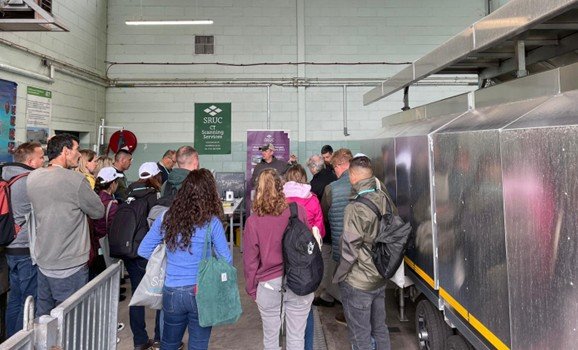
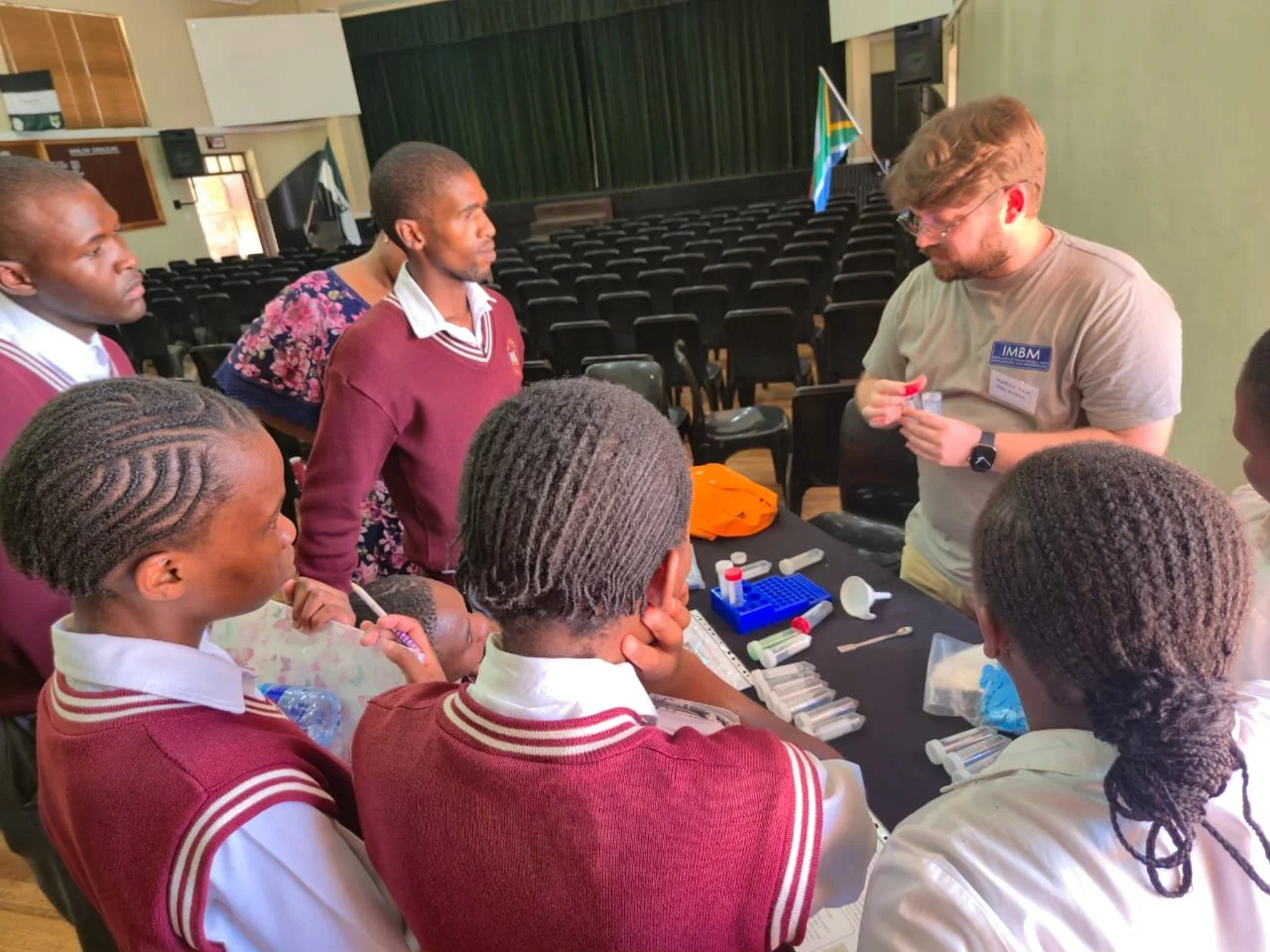
Researchers discuss the use of technology to measure methane emissions with international stakeholders
Specific details about the survey:
The survey aimed to establish a multi-country baseline of stakeholders’ (e.g. farmers, breeders, researchers, technical advisors) knowledge, perceptions, and willingness to adopt genetic tools for methane mitigation in sheep production. It was translated into six languages, and distributed in Ireland, France, Norway, the United Kingdom (UK), Uruguay and other Latin American countries. A total of 473 valid responses were collected and analysed using descriptive statistics and cross-country comparisons. Of these, 47% were commercial farmers and/or stud breeders, 23% were technical advisors, and 13% were researchers. The study found regional differences in awareness and attitudes: 29% of respondents recognized sheep as meaningful contributors to methane emissions, while nearly half perceived their impact as limited. By country, these proportions were 33% in Uruguay, 27% in the UK, 25% in Ireland, and 22% in France. Forty-four percent of respondents agreed that sheep methane emissions should be reduced, with Uruguay showing the highest support (55%), followed by France (48%), Ireland (40%), and the UK (29%). Familiarity with the concept of methane mitigation in ruminants was moderate to high, with 62% of respondents having previous exposure to the topic. Country-level familiarity ranged from 70% in Uruguay and 68% in Ireland to 59% in the UK and 36% in France. However, only 53% reported awareness of specific genetic tools for reducing methane emissions, indicating a gap between general awareness and technical knowledge. Ireland (65%) and Uruguay (60%) exceeded the overall average, while France (48%) and the UK (47%) were below it. The most frequently mentioned tool was genetic selection through Estimated Breeding Values, cited by 55% of respondents. Furthermore, 72% of respondents agreed that genetic tools can assist ruminants in adapting to climate change, while 82% viewed these tools as important for the sustainability of sheep farming, with 72% expressing a willingness to support the use of genetic tools to reduce emissions. For these three questions, responses were similar ( >70%) in Uruguay, France, and Ireland, with Uruguay showing the highest acceptance level. Conversely, the UK reported lower acceptance rates (< 62%), indicating a certain degree of skepticism. The survey also explored preferred communication channels and formats for knowledge transfer. Email (69%) and WhatsApp (28%) were the most cited channels, while written articles (70%) and short videos (49%) were the most requested formats. Respondents expressed a preference for receiving updates only when significant results were available, suggesting a need for concise and impactful communication strategies. In conclusion, the survey highlights broad international openness to genetic solutions for climate-smart sheep breeding but also underscores the importance of tailored communication and capacity-building strategies to address regional differences in knowledge and perception.
More details about the technology and the project itself:
This project (https://www.greenerahub.eu/sustain-sheep) aims to create an infrastructure for the incorporation of genetic merit for low environmental impact into national sheep breeding schemes and provides a mechanism for national and global comparison. Key benefits would be the incorporation of methane emissions, feed intake and efficiency measures. As all partner countries have invested in the same technology to measure methane emissions (portable accumulation chambers, PACs) from individual sheep, we have the perfect platform for synergistic research and investment has been made in developing an impactful team. This work will provide farmers and policymakers with tools to compare methane emissions from sheep production systems and will help to break down barriers to the successful implementation of science into policy.
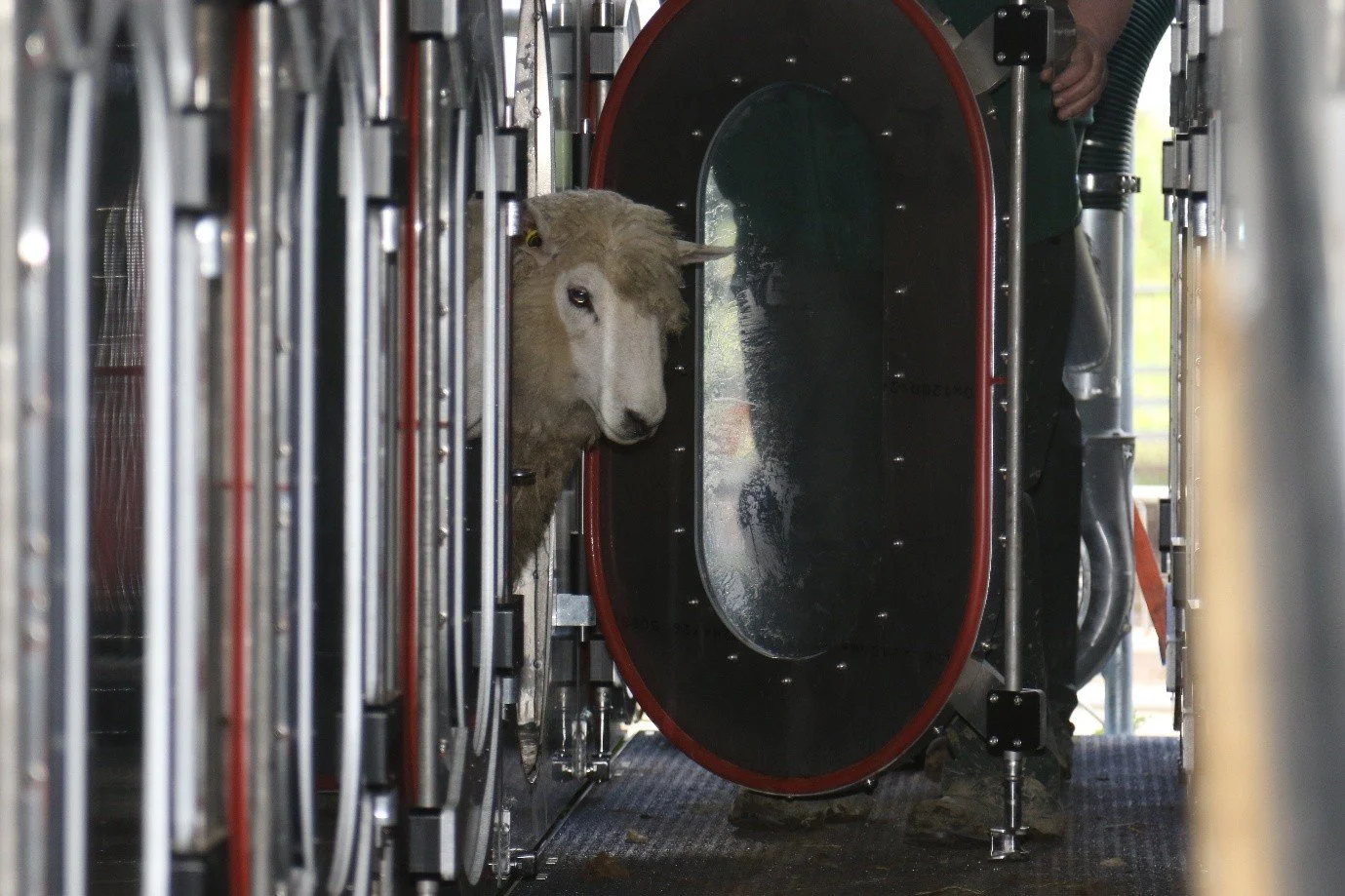
Measuring methane emissions from individual sheep in portable accumulation chambers (PAC)