
Green Era Hub in action: working together for smart fertilization, resilient crops and climate smart livestock
29 October 2026This report summarises part 1 of the 2 day webinar organised by Green ERA-Hub, a European partnership that connects 29 networks and programmes specialising in agriculture, food and biotechnology, all working towards sustainable, resilient and climate-smart agri-food systems.
The webinar focused on day 1 on the mid-term evaluation of the projects funded under Call 1. These projects were selected because of their innovative approaches to key themes such as nutrient management, protein transition, emission reduction and circular agriculture. On day 2 the webinar introduced the new projects from Call 2, which further build on systems and international cooperation.
Highlights of day 1
Watch the recording day 1 (Recording password: Webinar_29_10_2026!)Introduction to the webinar by coördinator Petra Schultz
The webinar started with an introduction, overview of working and progress of the Green Era-HUB project.
Keynote: Sustainable transformations in food and health systems
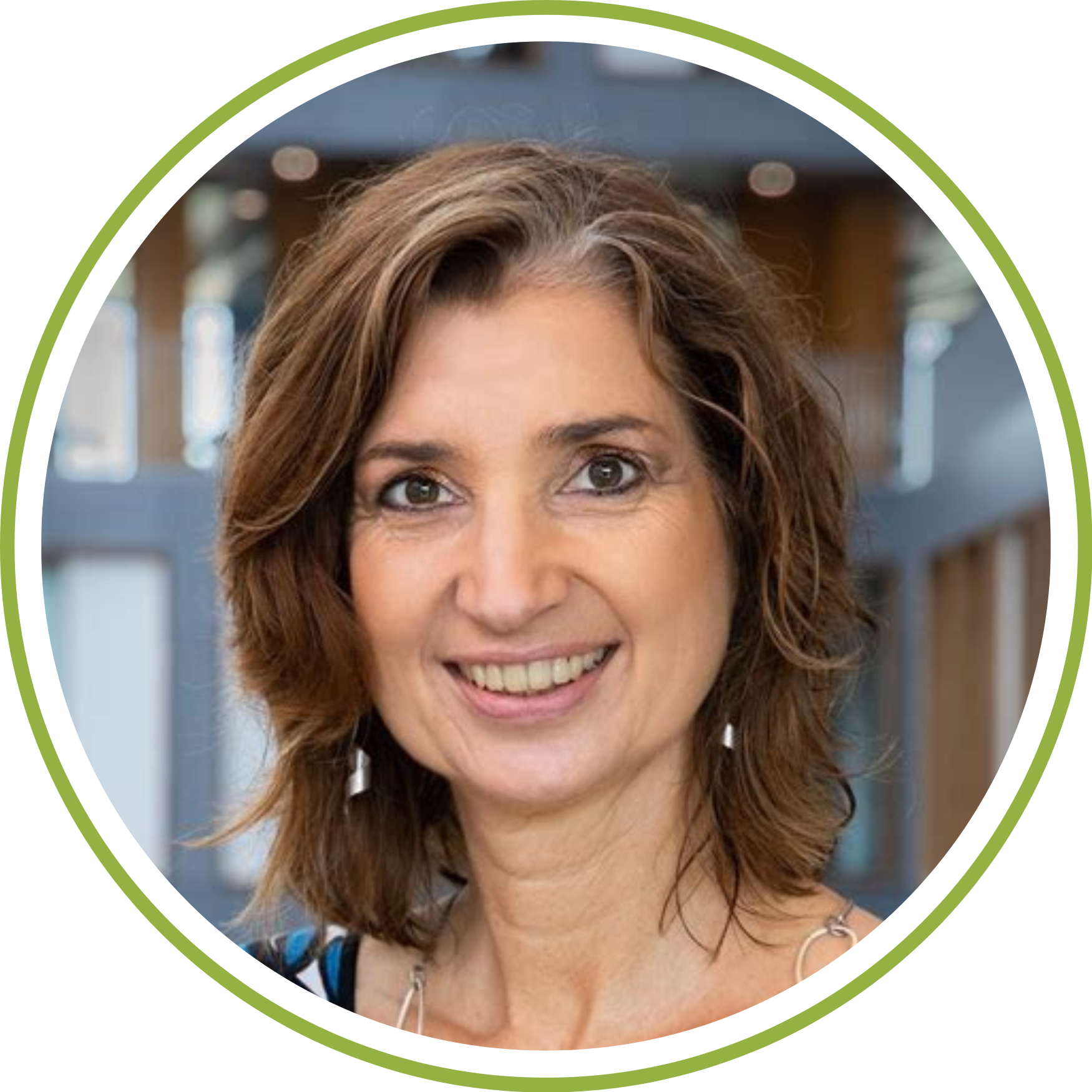
Professor Broerse is an expert in systems approach, social innovation and co-creation, and her work focuses on sustainable transformations in food and health systems. Her expertise closely aligns with the mission of Green ERA-Hub, which aims to connect science, policy and practice to support sustainable agri-food systems.
In her presentation “From Insights to Impacts”, Professor Broerse discussed how complex societal challenges, often referred to as “wicked problems”, can be addressed. Many challenges, such as the transformation of the food system, are systemic in nature, meaning they arise from interconnected factors and therefore cannot be solved by addressing only one part of the system.
According to prof Broerse, research still often follows a linear approach, where complex problems are divided into smaller sub-problems. While this can be useful, it may also lead to fragmentation of knowledge and a gap between science, policy and society.
To overcome these limitations, she actively promotes a systemic and transdisciplinary approach, in which researchers collaborate with other stakeholders such as policy makers, companies and citizens. An important method for enabling such collaboration is the use of living labs. These are environments in which different actors work together to test solutions in real-life contexts.
As an example, Broerse discussed the FoodCLIC project, where living labs have been established in eight urban regions. Within this project, various stakeholders collaborate through food policy networks to develop sustainable food strategies.
Overall, the keynote emphasised that complex societal challenges require systemic and collaborative approaches, where cooperation between science and society plays a central role.
After the inspring speech of Prof Broerse, the word was given to the projects of Call 1 who have reached their mid-term stage and did get the opportunity to review their progress, challenges and first insights.
Project session: presentation of Call 1 Projects
This session combined brief plenary pitches with small group discussions, offering an overview of Call 1 projects. This was followed by interactive exchange. Topics ranged from nutrient management and protein transition to emission reduction, circularity, and sustainable agriculture. Small group discussions enabled dialogue, clarifying project goals, approaches, early insights, and shared challenges, while fostering peer learning and reflection at the projects’ halfway through their term.
The NutriStorm project aims to improve the sustainability of nutrient management in agriculture. Current farming practices often rely on a linear fertilisation model, characterised by high inputs of synthetic fertilisers. This can lead to soil degradation and environmental pollution. The project focuses on optimising the balance between carbon, nitrogen and phosphorus (C-N-P) in agricultural systems in order to improve nutrient efficiency. The research combines: field monitoring, controlled greenhouse experiments and validation through field trials
Pitch and presentation
NSmartSystems develops smart, open-source tools that help farmers manage nitrogen more efficiently across different cropping systems. The project combines remote sensing data, soil measurements and crop data to analyse spatial and temporal variations in nitrogen availability. This information allows farmers to apply variable-rate fertilisation, improving nutrient efficiency and supporting crop diversification and rotation strategies. The tools include: improved nitrogen and soil maps, yield predictions and decision-support software. The project aims to reduce nitrogen use by 5–35%, while supporting precision agriculture and climate-resilient farming.
Pitch and presentation
FertiGo focuses on smart fertilisation strategies using innovative plant-based solutions. For nitrogen management, the project integrates crops that produce biological nitrification inhibitors (BNIs), which help to reduce nitrogen losses. Regarding phosphorus, FertiGo is looking at the mobilisation of phosphorus from the soil matrix and evaluating the performance in different agro-ecosystems and crop mixtures. The goal is to increase nutrient efficiency while reducing environmental impact.FERTiGo
Pitch and Presentation

ProRMAS develops a recirculating multitrophic aquaponic system to produce high-quality proteins and organic fertilisers from saline water resources. The system combines: shrimp, marine worms, salt-tolerant plants and seaweed. Together they form a circular production system in which waste streams from one organism become inputs for another. Shrimp waste feeds the worms, while excess nutrients are absorbed by plants and seaweed. Remaining residues are processed into bio-fertilisers. The project aims to demonstrate a scalable model for sustainable aquaponics that addresses climate change and water scarcity.
Pitch and Presentation
DARE2CYCLE addresses the protein gap and the large amounts of waste generated by the dairy sector. The project develops a biorefinery platform that converts dairy by-products such as whey into high-value proteins and bio-based products. By valorising these by-products, the project supports a circular dairy sector, reduces waste and contributes to European protein self-sufficiency.
Pitch and Presentation

HiGa explores the potential of the black soldier fly (Hermetia illucens) as a sustainable protein source. The project develops insect-rearing systems that convert organic waste streams into protein and fat for animal feed. The larvae can be used in feed for fish and livestock, while the insect manure (frass) can serve as an organic fertiliser. HiGa also evaluates the environmental impact and economic feasibility of insect farming.
Pitch and presentation
LIFE focuses on building climate‑resilient, water‑efficient and self‑sustainable agri‑food systems. It develops a circular approach that transforms animal manure into safe, nutrient‑rich fertilisers for hydroponic and crop systems, reducing reliance on synthetic inputs. The project combines novel bacterial and chemical processes with digital monitoring tools to control nutrient conversion and crop growth precisely. The aim is a climate‑smart farming model that boosts fertiliser efficiency, promotes circular resource use and enhances food security
PItch and Presentation
SUSTAIN SHEEP focuses on breeding strategies to reduce methane emissions from sheep. Sheep are responsible for approximately 7% of annual methane emissions from livestock. The project aims to identify low-methane animals while maintaining productivity and animal health. By combining genetic selection, nutrition and improved farm management, the project supports a more climate-friendly sheep sector.
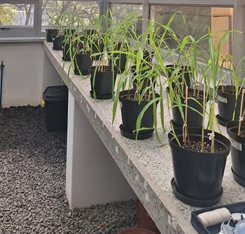
The AMD project (Gas in Maize Mitigation) studies the use of plant growth-promoting bacteria (PGPB) to improve maize production and reduce greenhouse gas emissions.
The bacteria are isolated and tested in South Africa and Cameroon, with the aim of scaling up the technology. Maize is the third most important food crop in Sub-Saharan Africa, accounting for around 40% of cereal production and playing a crucial role in food security and rural incomes. The project investigates whether PGPB technology can increase yields while reducing environmental impacts.
Pitch and presentation
Main Reflections of day 1
One day 1 of the webinar, we could see that a coherent portfolio emerged. Even across different topics and technologies, the projects can be read as a connected portfolio addressing resilience, circularity and transition in the agri-food system.
The day brought together strategic framing and practice. Through keynotes, partnership sessions and pitches, broader system challenges were translated into concrete project ideas.
The mid-term reflection format worked well, assessing project progress, early results and remaining needs for exchange. Dialogue was as important as presentation. Breakouts showed that value lay not only in showcasing projects, but also in sharing insights and discussing implementation across themes.