Report of the Green Era-Hub Webinar, 30 October 2025 (day 2)

‘Green Era Hub in action: working together for smart fertilization, resilient crops and climate smart livestock’
29-30 October 2026
This report summarises day 2 of the webinar organised by Green ERA-Hub,
Highlights of day 2
Watch recording day 2 (Recording password: Webinar_30_10_2026!)
Presentation of the projects of call 2
On the second day of the webinar, the focus shifted to the new projects from call 2, which were selected based on their innovative approach to climate-smart agriculture, resilient crops and sustainable livestock farming. Each of the projects gave a short presentation on their project. The six selected projects will focus on themes such as biostimulants, regenerative agriculture, methane reduction, sensor technology, biodiversity and systems thinking. What connects them is their focus on collaboration, innovation and impact.
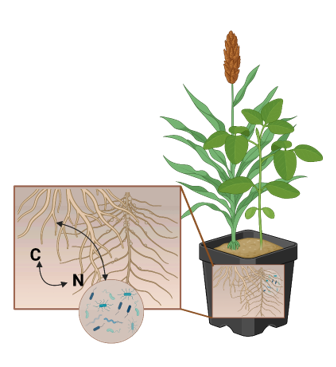

Thie ORACLE project investigates drought-tolerant cropping systems, focusing on sorghum–legume intercropping and root characteristics that improve performance under drought conditions. The research centres on root systems and their interaction with the soil, as these are crucial for water and nutrient uptake. The project is studying how different sorghum genotypes and intercropping with pulses influence the rhizosphere, nitrogen efficiency and soil microbes. In this way, ORACLE aims to identify varieties and cropping systems that are more drought-resistant, and to contribute to more sustainable agricultural practices, particularly in water-scarce regions.
This project explores how crop traits, microbes, and soil conditions interact in real farming systems to support sustainable agriculture and food security. Crop Boosters develops biotechnology-based biostimulants and biofertilisers from plant-derived nanovesicles and bio-based extracts to improve plant growth, stress resilience, and nutrient uptake while reducing chemical inputs and environmental impact.
Research includes production systems and greenhouse trials (e.g., on tomato), supported by pilot-scale biomanufacturing and European testing facilities. Key challenges include ensuring consistent product quality, lowering costs, validating field performance and safety, and scaling up to real farming conditions.
FARMSCAN develops biodegradable soil sensors and data platforms for real-time monitoring of soil conditions, enabling more precise and sustainable fertilisation and irrigation. The project focuses on small, low-cost sensor nodes that measure parameters such as moisture and pH, with data collected remotely (e.g., via drones or RFID). The sensors are designed to degrade after about 12 months, preventing electronic waste. By combining sensor technology, advanced materials, and AI, FARMSCAN provides high-resolution soil data and decision-support tools. The goal is to support precision agriculture, helping farmers reduce inputs and improve sustainable farm management.
MethTrack uses carbon isotope analysis to monitor and validate methane mitigation strategies in ruminant livestock, a major source of greenhouse gas emissions.
The project analyses the ratio of Carbon-13 to Carbon-12 to track methane production and assess the effectiveness of reduction strategies, using fermentors and isotope ratio mass spectrometry to study methane metabolism in ruminants and map the different methane production pathways. In the long term, the project hopes to create practical tools for farmers to evaluate methane reduction strategies on their farms and contribute to more climate-friendly livestock production. By involving farmers, scientists, and policymakers, MethTrack aims to raise awareness and develop practical tools to support more climate-friendly livestock production.
The CerealBio project develops nutrient-efficient, climate-resilient wheat and oat varieties to support sustainable cereal production in Europe. It focuses on plant–microbe interactions, viewing crops as metaorganisms that benefit from soil microbiota. The goal is to create high-yielding cereal ideotypes with traits that enhance these interactions. Researchers study genetic variation different germplasms, test beneficial microbes, and evaluate crops under challenging conditions as low nitrogen and disease pressure. Launched in July 2025, the project analyzes diverse cereal genotypes to improve resilience and sustainability, while promoting collaboration through field trials, technologies, and workshops.
This project combines soil physics, geophysics, and AI to better understand soil–root dynamics under climate extremes. It addresses the limitations of current monitoring methods by developing non-destructive, field-scale approaches using agrogeophysics and IoT soil sensors. This enables high-resolution data on soil properties and root systems to support real-time, data-driven decision-making. The project focuses on characterizing soil–root interactions, optimizing sensor placement, and conducting coordinated field trials. It also aims to develop standardized workflows for sustainable soil management. AGROSOIL promotes collaboration to tackle challenges such as data integration and comparability across sites.
Keynote: ‘The role of the bio-economy in accelerating the transition to a sustainable and resilient agri food system’
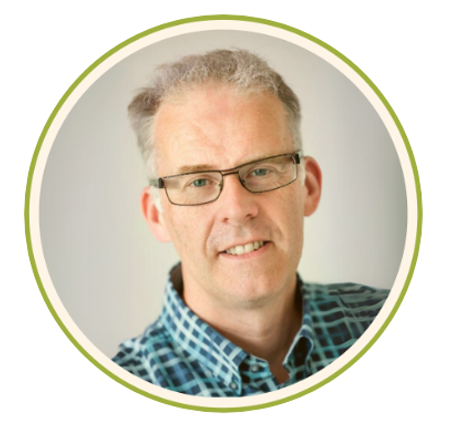
After the break the word was given to prof. Erik Mathys. As an expert in sustainable agriculture, system transitions, and the bioeconomy, he provides valuable insights into how we can drive change in the agri-food system.
Prof. Mathijs emphasized the importance of a systemic perspective on the agri-food sector, highlighting the interactions between agriculture, food production, the environment, and society. He explained that sustainability requires balancing ecological efficiency with social and planetary boundaries, while resilience ensures that farming systems can adapt to climate shocks, market fluctuations, and policy changes.
A key focus was the bioeconomy, which aims to maximize the use of renewable biological resources, including agricultural residues and by-products, while always prioritizing food security and environmental limits. Prof. Mathijs also highlighted the role of circular and sustainable business models, which integrate innovative practices into existing systems, create value from biomass streams, and navigate both internal and external barriers, from technical knowledge gaps to market and institutional challenges.
Overall, the keynote illustrated how innovation, sustainability, and resilience can be combined to drive a more sustainable, adaptable, and efficient agri-food system.
Audience Questions and Discussion Highlights
During the Q&A session, participants raised important topics around global nutrient management, consumer choices, organic agriculture, and policy incentives. Prof. Mathijs highlighted that while technologies can improve efficiency at the farm level, challenges such as animal welfare, global consumption imbalances, and systemic barriers make large-scale solutions complex. He also noted that policy measures, such as CO₂ taxes or subsidies for natural fertilizers, can influence adoption, but their effects are often temporary and must be considered alongside economic and social realities. The discussion reinforced the need for holistic approaches that combine technology, behavioral change, and supportive policies to drive sustainable agri-food systems.
Upcoming Horizon Europe calls
And as last part of the day, several partners shared updates on upcoming Horizon Europe calls and partnership activities, highlighting opportunities for collaboration across the European research landscape.
1. Stefano Grando – MASAF Italy: 3rd Green ERA-Hub Call
The third GEH call (launched on 30 September 2025) focuses on the sustainable production and use of biomass, aiming to accelerate the shift from a fossil-based to a bio-based economy. Key topics include: Plant breeding for improved crop resilience, health, and soil/environment interactions (temperate, rainfed, and irrigated systems) and Biotechnological applications to optimize biomass utilization, including agricultural residues, forestry by-products, industry waste, and intermediates.
More info on Green ERA-Hub Calls
2. Frank Hengsen – Jülich: FutureFoodS Partnership Call
Frank provided insights into the FutureFoodS Partnership Call, which supports research and innovation to build sustainable, resilient, and nutritious food systems across Europe.
ttps://ec.europa.eu/info/funding-tenders/opportunities/portal/screen/home"FutureFoodS Partnership
3. Christian Bruer – Jülich: AgData Partnership Call
The AgData Partnership (Horizon Europe) aims to develop EU-wide, data-driven solutions for agriculture. The call focuses on::
Data technologies and management
Data-based solutions for sustainable agriculture
Data-based solutions for policy-making
4. Ivana Trkulja: Agroecology Partnership Call & Organic Policy Updates
Ivana reflected on the Agroecology Partnership (72 partners, 26 countries), aimed at promoting resilient, productive, and sustainable farming systems that support climate, ecosystem, biodiversity, and social goals. Key points include:
Alignment with the Organic Summit 2025 and the EU target of 25% organic production and consumption by 2030.
The need for clear definitions and monitoring mechanisms for Horizon Europe programs on agroecology and organic farming.
Importance of including organic regulations and estimating research budgets for the organic sector.